Best anchorages and coves in Blanes by boat 2026
Guide to anchorages in Blanes: 6 coves with depths, seabed type, prevailing winds and access. Cala Sant Francesc, Sa Forcanera, Cala Bona and more.
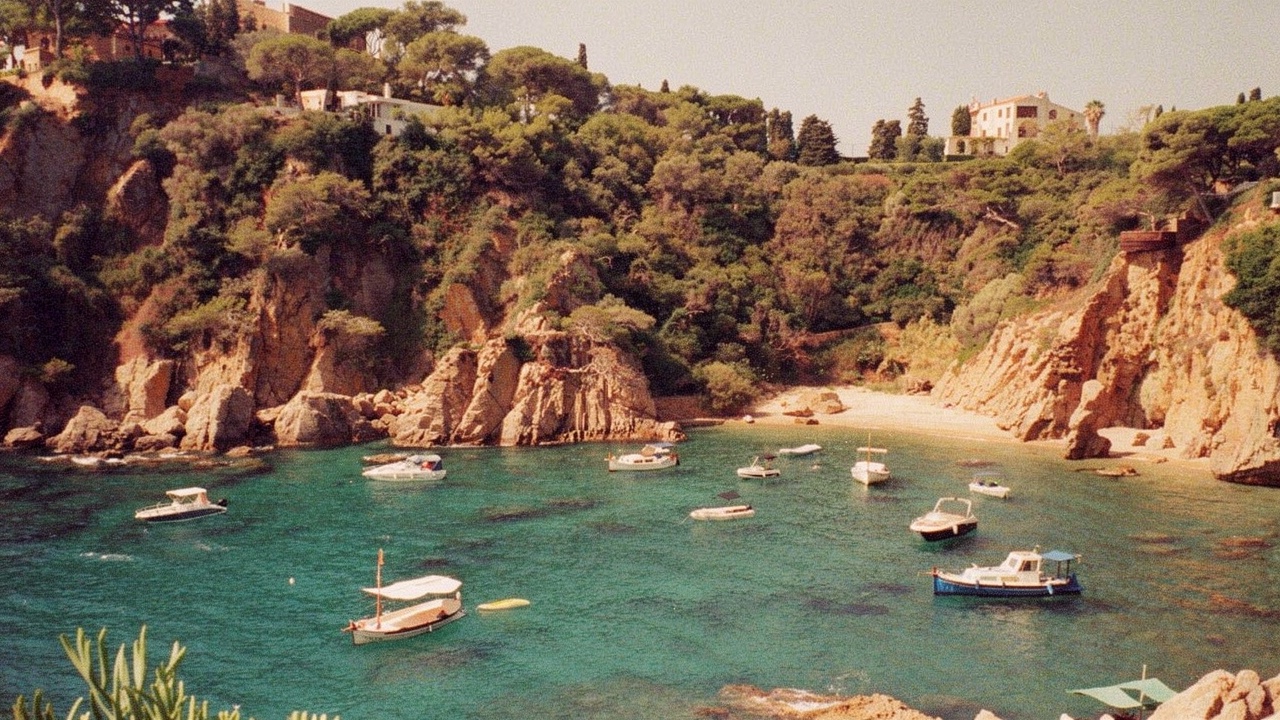
Knowing where to anchor is half the work when you hire a boat in Blanes. The other half is knowing what’s on the seabed, how deep it is, where the protected posidonia lies and how it all shifts with the wind. This guide covers the six most useful anchorages on the Blanes-Lloret stretch, with the practical detail commercial sites don’t usually give.
Works for any no-licence boat (up to 5 m / 15 HP) and for somewhat larger boats. All distances are measured from the entrance to Blanes harbour.
If you don’t have a boat yet, have a look first at the guide to no-licence boat hire in Blanes.
Before anchoring: three things worth knowing
1. Posidonia is a protected area. The posidonia seagrass meadows along the southern Costa Brava are protected: anchoring on the plant is forbidden. Safe anchoring zones are marked with large yellow buoys or shown on the map your rental operator hands you. When in doubt, anchor on clearly visible sand.
2. The westerly (Garbí) picks up in the afternoon. On this stretch, the westerly typically comes in from 14:00–15:00 in summer and stirs up a light chop. For anchorages exposed to the west (Cala Sant Francesc, the S’Abanell sector), set off early and head back before the wind.
3. Large yellow buoys = reserved area. Stay at least 200 m from a large yellow buoy: it marks a swimming zone or a reserve. The fine is real.
1. Cala Sant Francesc
1.5 nautical miles north of the harbour. The closest Blue Flag cove to Blanes and the obvious first anchorage on any route.
| Detail | Value |
|---|---|
| Depth | 3–8 m in the usual zone |
| Bottom | Sand with some patches of posidonia |
| Sheltered winds | North and NE |
| Exposed winds | South, SE |
| Shore access | Yes, by tender or swimming |
To anchor, look for the clearly visible sandy patch close to the beach but outside the marked swimming zone. There’s a mild current when the south wind comes in. No boats stay overnight here; this is a day anchorage.
2. Sa Forcanera
2 nautical miles north. A smaller, less-visited cove just past the S’Auguer development.
| Detail | Value |
|---|---|
| Depth | 4–7 m |
| Bottom | Mix of sand and rock |
| Sheltered winds | North |
| Exposed winds | South, SW |
| Shore access | Limited (rocks) |
Good for midday and a swim: clear water, plenty of rock-dwelling fish. Shore access is awkward — better to stay on the boat or get in with a float.
3. Cala Bona
2.8 nautical miles north. A wild cove, accessible only from the sea, one of the essential stops on any half-day route.
| Detail | Value |
|---|---|
| Depth | 3–6 m in the sandy area |
| Bottom | Fine sand, easy to anchor |
| Sheltered winds | North, NE |
| Exposed winds | South, SE |
| Shore access | Yes, small beach |
The easiest anchorage in the area: the sandy zone is wide, no posidonia, even depth. It fills up in August, but between May–June and September there’s usually room.
4. Cala Treumal
3 nautical miles north, just before the Lloret boundary. Smaller than Cala Bona, with pine-clad rock walls.
| Detail | Value |
|---|---|
| Depth | 5–9 m |
| Bottom | Sand with rocky outcrops |
| Sheltered winds | North and NE |
| Exposed winds | South, SW |
| Shore access | Difficult (rocks) |
Anchor in the centre of the cove, not at the edges (rock close to the surface). The water here is among the clearest on the stretch and the snorkelling is excellent.
5. Cala Portopí
4 nautical miles north, already in Lloret. The cove with the best rocky bottoms for snorkelling on the stretch. It’s where the guided trips stop (including Atlantis Experience if you’re on a large boat).
| Detail | Value |
|---|---|
| Depth | 4–10 m |
| Bottom | Rock with posidonia (anchor carefully) |
| Sheltered winds | North |
| Exposed winds | South, SE |
| Shore access | Limited |
Anchoring here requires care: posidonia meadows ring the cove. Find the clearly visible sandy patch and respect the yellow buoys.
6. Off Sa Palomera (transit point)
Right opposite Blanes harbour, this isn’t a tourist anchorage but a pass-through point for photographing the rock outcrop from the water. Don’t linger anchored here for long: through traffic, current and proximity to the marina entrance.
If you just want to “see Sa Palomera from the other side”, cut the engine 100 m off the rock, take your shots and move on. No anchor needed.
How to pick by your day
| If you’re doing… | Best anchorage |
|---|---|
| A short 2-hour route | Cala Sant Francesc + pass by Sa Palomera |
| Half a day with a swim | Cala Bona or Cala Treumal |
| Heavy snorkelling | Cala Portopí |
| A full day with multiple stops | Sant Francesc → Cala Bona → Treumal → Portopí |
| Setting off during the Garbí (afternoon) | Any of the northern sector (sheltered from the west) |
Practical tips most people skip
1. Anchor scope: 4× the depth. If you anchor in 5 m, pay out 20 m of line. Less than that and the anchor will drag. Rental operators give you the right gear but rarely explain this.
2. Mark a point on shore. Once anchored, line up two fixed points on land (a house with an antenna, for example). If the alignment changes, the anchor is dragging — you need to pull it up and re-anchor.
3. The sound of the anchor digging in. When you put the engine in gentle reverse for the anchor to bite, you should hear it scratching the bottom. If you hear nothing and the boat shifts a lot, it hasn’t held.
4. Lift the anchor with the line, not with the engine. Pull the boat over the anchor by hand (engine in neutral). When the line is vertical, lift straight up. If you do it with the engine in forward, you risk catching the anchor under the hull.
5. If you don’t feel up to it, don’t anchor. There are perfect routes that don’t require anchoring at all: out and back, cutting the engine for a photo, cruising slowly. If anchoring is going to stress you out, simply don’t anchor.
Frequently asked questions
Do I need a boating licence to anchor? No. If you’re piloting a no-licence boat (up to 15 HP / 5 m), you can also anchor with it, as long as you stay in the area permitted by the rental operator and respect the protected zones.
Are there fines for anchoring on posidonia? Yes, there are. The amount depends on the authority (Generalitat, Coastal Authority) and on whether you damage the meadow. In practice, inspectors are more active in July–August and in zones with clearly marked buoys. The sensible move is to always anchor on sand.
Which cove is best to start with if I’ve never anchored? Cala Bona. Fine sand bottom, even depth, wide area. If you drag, you pull up and try again with no risk.
Can I sleep at anchor in any of these coves? Not with a no-licence rental — most operators require the boat back before nightfall. For private boats or licence-required charters, technically yes, but check with the port authority and respect each cove’s rules.
How do I tell the wind is shifting before it’s too late? Look at the clouds upwind and the direction of smoke or flags on land. If the surface ripples shift orientation or the pine tops move differently, the wind is veering.
In short
With six solid anchorages within 4 nautical miles, the Blanes-Lloret stretch is good for two or three full days without repeating a cove. If it’s your first day, go to Cala Bona and don’t overthink it. If you’ve anchored before, link three stops together for a complete day. The difference between anchoring well and badly comes down almost always to laying out the right scope and not rushing the reverse.
If you want to extend to coves reachable only by sea further north, follow on to the hidden coves of Blanes only reachable by sea. And if you’re still sorting the boat, remember that Blanes boat hire with 4.8★ on Google is the option with the best pre-departure briefing for safe anchoring.