Castell d'en Plaja, Lloret: the most photographed castle 2026
Castell d'en Plaja in Lloret de Mar: history, where to view it from, best time for photos, myths about the castle and practical tips for the visit.
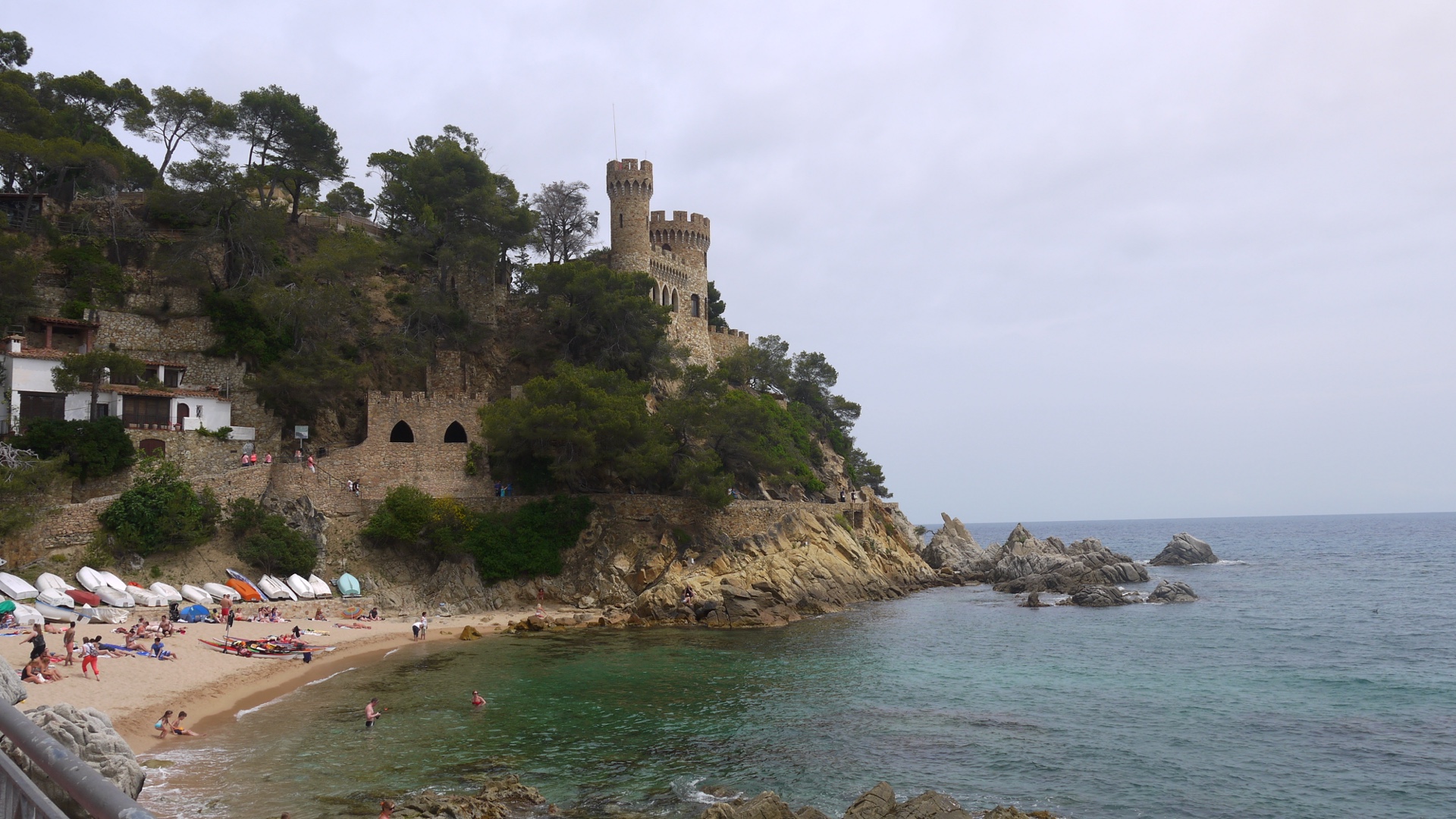
The Castell d’en Plaja is, without argument, the most photographed building in Lloret de Mar. It appears on every postcard of the town, on the covers of travel guides and in the photos every visitor uploads. The curious thing is that it isn’t a real medieval castle — it’s a private residence built in 1935 that imitates a medieval style, put up by a Barcelona industrialist who fell for the spot. But the visual effect on the Sa Caleta headland is so well executed that it has defined the image of Lloret for almost a century.
This guide covers the real history, the viewing options (because yes, you can see the castle but you CAN’T go inside) and the best photo angles.
The real history (in brief)
Built between 1932 and 1935 by the Barcelona industrial engineer Narcís Plaja i Martí on a rocky outcrop known as Sa Caleta. It’s a historicist building with medieval inspiration: crenellated walls, central tower, Gothic windows. It imitates a 14th-century defensive castle but structurally it’s an early-20th-century residence.
Privately owned today and you can’t visit the inside. What you see from outside is all there is to the public.
Why the name “d’en Plaja”?
“En” in Catalan is the masculine personal article. It means “Plaja’s Castle” — Mr Plaja, the builder. It has nothing to do with the Spanish word for beach (playa).
How to see it: the 4 main angles
1. From Sa Caleta beach (the classic postcard)
The shot in every photo. You drop down to Sa Caleta cove (southern end of the main Lloret beach) and, looking up, you get the whole castle with its tower, crenellations, the rocks below and the cove with boats or parasols depending on the season.
It’s the angle 90% of castle photos are taken from. Free access via the beach.
2. From the water (the alternative postcard)
If you have a boat, kayak or pedalo, heading 50–100 metres offshore and looking back at the castle gives you the opposite perspective: the walls front-on, waves breaking on the rocks, the rock + castle + sky composition.
It’s the professional angle commercial photographers use.
3. From the north seafront (the distant one)
From the seafront promenade in central Lloret, looking south, the castle appears smaller but in context with the whole beach. Useful for a “Lloret de Mar” wide shot.
4. From the Camí de Ronda (the elevated one)
If you walk south along the Camí de Ronda, several points give a view of the castle from above, with the sea behind. Recommended for photographers.
Best time of day for the photo
| Time | What to expect |
|---|---|
| Sunrise | Warm front light, calm sea, no people. The best for a professional shot. |
| 9:00–11:00 | Good light, some people on the beach |
| 12:00–15:00 | AVOID (hard light, ugly shadows, busy beach) |
| 17:00–19:00 | Golden side light, especially good in summer |
| Sunset | Castle silhouette against the sky. Spectacular but more cliché |
Honest pick: go at sunrise in summer (6:00–7:00 in July-August). The golden castle against a clean sky, an empty beach, the boats moored. It’s the shot you’ll never get mid-morning.
Combine with other plans
- Castell d’en Plaja + Sa Caleta + Santa Clotilde: three visual icons of Lloret in a single southern walk (on foot along the Camí de Ronda).
- Castell + sunset + dinner: castle at sunset + dinner along the central seafront.
- Castell + kayak: hire a kayak on the main beach, head out, photograph the castle from the water.
What you can’t do
- You can’t go inside — private residence
- You can’t climb to the castle via the headland — fenced, private heritage
- No known interior guided tours
- It’s not for hire as a venue (it’s a residence, not a monument)
Common confusions
1. It’s not actually medieval. It’s 20th-century (1935). If you want real medieval castles in the area, look at the Castell de Sant Joan in Blanes (11th century) or the Tossa de Mar castle (12th century).
2. It’s not public. Although it looks like a monument, it’s private property and the Plaja family descendants maintain it.
3. Sa Caleta and Castell d’en Plaja are different things. Sa Caleta is the small beach below. The castle sits above. People often confuse the two as one name.
4. It’s not the only castle in Lloret. On Sant Joan hill (1 km north of the centre) sit the real medieval ruins of the Castell de Sant Joan de Lloret with a viewpoint. Not to be confused with the Blanes castle of the same name.
What most guides don’t tell you
1. Access to Sa Caleta from the main Lloret beach is a 5-minute walk. You leave from the southern end of the seafront, follow a short path, and you’re below the castle.
2. In shoulder season (May, October) there are fewer boats in Sa Caleta, so the castle-with-beach shot comes out cleaner. In August, parasols and kayaks clutter the composition.
3. There’s a much-sought nighttime version of the photo: the castle lit up at night from the beach. Some seasons it’s lit with warm light; check before going.
4. The headland it sits on is geologically interesting: granite that has held against centuries of waves. If you go down to Sa Caleta, take a look at the rocks too.
5. The Plaja family has a real connection with the town — they’ve made cultural contributions to the community over decades. The castle isn’t an isolated whim.
Frequently asked questions
When was Castell d’en Plaja built? Between 1932 and 1935 by Narcís Plaja i Martí. Not medieval, despite the style.
Can you visit the inside? No. It’s a private residence.
Is there a fee? No. The view from outside (beach, promenade, sea) is free.
Is it open to the public? The inside isn’t. The outside views, always. Sa Caleta beach below is freely accessible.
What’s it like inside? Historicist residence style. Rooms decorated like a medieval castle but with 20th-century comforts. There are archive photos online in Catalan repositories.
In short
Castell d’en Plaja is the iconic image of Lloret de Mar and an interesting case of 20th-century historicist architecture. To photograph it well, go at sunrise or sunset and pick the angle to suit what you want to convey. For the rest, accept that this is an outside-only view — the interior isn’t accessible, but the visual impact from outside is what justifies the trip.
For more local culture, follow on to the Santa Clotilde Gardens (15 min walk away) or to the Museu del Mar in Lloret.